
Empire Crypto: Ultimate Web3 Beginner Handbook
The digital economy is undergoing a massive paradigm shift. As traditional financial institutions struggle with latency, high transaction fees, and centralized points of failure, Web3 emerges as the trustless, decentralized internet powered by blockchain technology. Navigating this new ecosystem requires reliable, actionable intelligence. At Empire Crypto, we bridge the gap between complex blockchain systems and everyday users. Whether you want to set up your first non-custodial wallet, understand self-executing smart contracts, or leverage high-precision crypto market data to track decentralized assets, Empire Crypto serves as your definitive companion.

What is Web3?
To understand Web3, it helps to examine how the architecture of the internet has evolved over the past three decades:
- Web 1.0 (Read): The static internet. Users consumed content hosted on basic personal websites or directory pages (e.g., GeoCities). Interactions were strictly one-way.
- Web 2.0 (Read + Write): The social internet. Users generate content on platforms like YouTube, X, and Facebook. However, a small handful of centralized corporations store user data, harvest personal information, and retain total control over monetization.
- Web 3.0 (Read + Write + Own): The decentralized internet. Powered by distributed ledgers, Web3 allows creators, investors, and everyday web users to retain sovereign digital ownership of their data, identities, and financial assets.
By leveraging Empire Crypto educational tools and analytics platforms, users can track how Web3 protocols distribute value back to active network participants.
Core Pillars of the Web3 Ecosystem
Web3 is not a single software application; it is an interconnected ecosystem built upon several core technologies.
1. Blockchain Networks
A blockchain is a distributed database shared among nodes in a computer network. Unlike traditional server architectures, information added to a block is cryptographically linked to the previous block, rendering the ledger immutable and transparent.
2. Smart Contracts
Smart contracts are automated computer programs stored on a blockchain that execute specific contractual terms once pre-defined conditions are met. They eliminate human intermediaries, reducing counterparty risk and transaction processing fees.
3. Decentralized Applications (dApps)
dApps are digital applications or programs that run on a decentralized network rather than a single computer or corporate server. Users interact with dApps via cryptographic Web3 wallets instead of username/password combinations.
4. Cryptographic Assets
Digital tokens represent native units of account on a blockchain (e.g., Bitcoin, Ether) or specific utilities within an application ecosystem (governance tokens, stablecoins, non-fungible tokens).
About Empire Crypto Data: Institutional Intelligence for All Traders
Understanding Web3 mechanics is step one; making intelligent decisions inside the live market is step two. That is where Empire Crypto Data enters the picture.
Raw blockchain networks generate enormous volumes of unparsed technical information. Every transaction contains complex hex codes, internal contract calls, gas execution logs, and wallet state changes. Empire Crypto acts as an advanced processing layer, transforming raw on-chain events into structured, high-value financial intelligence.
Why Industry Professionals Count on Empire Crypto Data Solutions
Whether you are evaluating decentralized lending protocols or analyzing decentralized exchange liquidity, relying on outdated or inaccurate metrics can lead to costly mistakes. Empire Crypto delivers leading crypto data solutions built for speed, accuracy, and depth:
- Enterprise-Grade Crypto Market Data: Real-time visibility into order books, decentralized exchange liquidity pools, cross-chain bridge flows, and token trading volumes across top blockchain networks.
- Unwavering Cryptocurrency Data Reliability: High-frequency trading and protocol health analysis demand 100% data integrity. Empire Crypto ensures zero data drops or delayed updates.
- Advanced Data Analytics Cryptocurrency Engines: Monitor protocol revenue growth, track total value locked (TVL) changes, and evaluate underlying tokenomics before placing a single trade.
- Actionable Crypto Data Analysis: Stop relying on retail hype or social media rumors. Using empirical cryptocurrency data provided by Empire Crypto, you can identify active user adoption and smart money wallet movements before they hit mainstream news feeds.
Beginner’s Guide: Step-by-Step Setup for Your First Web3 Experience
Transitioning from Web2 to Web3 requires establishing secure habits. Follow this step-by-step roadmap to start safely.
Step 1: Choose and Install a Non-Custodial Wallet
A non-custodial wallet gives you complete control over your private keys and digital assets.
- Hot Wallets (Software): MetaMask, Rabby, or Phantom. ideal for daily dApp interactions.
- Cold Wallets (Hardware): Ledger, Trezor, or Keystone. Offline hardware devices built for long-term cold storage.
Security Warning from Empire Crypto: When setting up your non-custodial wallet, you will be given a 12 to 24-word Secret Recovery Phrase (Seed Phrase). Write this phrase down physically on paper or metal. Never save it on a cloud server, email, or digital screenshot. Anyone who gains access to your recovery phrase gains total control over your funds.
Step 2: Fund Your Wallet with Native Tokens
To execute any transaction or smart contract interaction, you must pay network gas fees in the native cryptocurrency of that chain:
- Ethereum Network: Requires Ether (ETH).
- Solana Network: Requires Solana (SOL).
- Polygon Network: Requires POL (formerly MATIC).
Purchase small amounts of native tokens on a centralized exchange and withdraw them to your public wallet address.
Step 3: Connect to a Verified dApp
Navigate to a reputable decentralized application (e.g., a decentralized exchange like Uniswap). Click “Connect Wallet,” choose your wallet software, and authorize the connection signature.
At no point does connecting a wallet require entering your secret recovery phrase. If a website asks for your recovery phrase to “synchronize” or “verify” your wallet, it is a phishing scam.
Intermediate Guide: Analyzing Web3 Protocols Using On-Chain Data
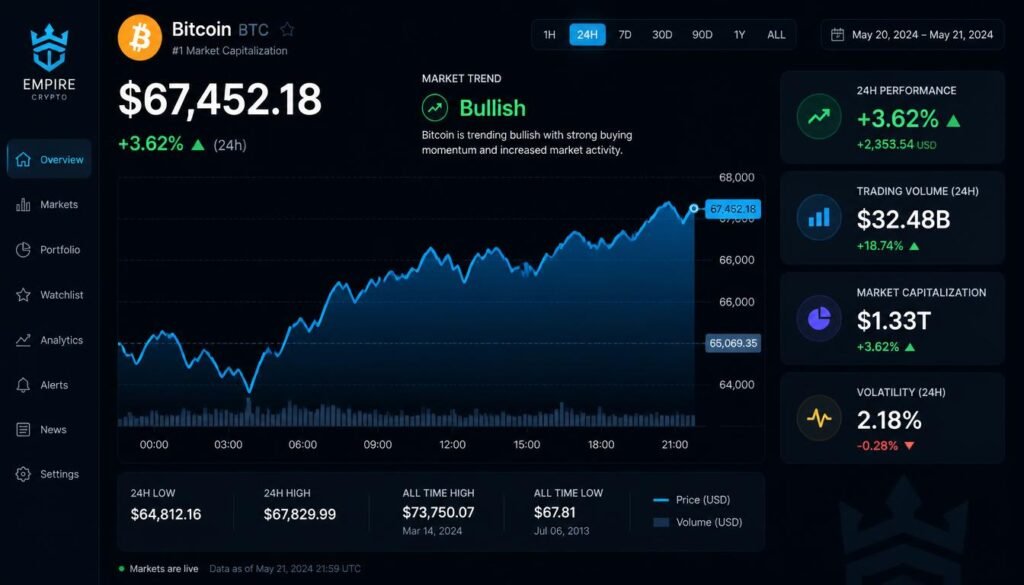
Once you understand basic wallet management, the next leap in Web3 proficiency involves using on-chain crypto data analytics to evaluate protocol health.
1. Total Value Locked (TVL)
TVL measures the total dollar value of assets currently deposited in a protocol’s smart contracts (such as staking pools, lending markets, or liquidity pools). High TVL relative to market cap often signifies strong protocol trust and user activity.
2. Protocol Revenue vs. Token Emissions
In Web2, investors evaluate companies using price-to-earnings (P/E) ratios. In Web3, smart contracts collect fees from user transactions.
- Protocol Revenue: The portion of total fees retained by the protocol or distributed to token stakers.
- Token Emissions: High token inflation handed out as “liquidity mining rewards” can artificially inflate TVL while diluting long-term token value.
By utilizing Empire Crypto market data, investors can quickly strip away inflationary rewards and look at pure, organic protocol revenue.
3. Smart Money & Whale Tracking
Blockchain transactions are publicly accessible. By performing structured crypto data analysis via Empire Crypto, traders can monitor high-performing wallet clusters, tracking when venture funds, institutional desks, or protocol founders deposit or withdraw capital.
Comparing Centralized Finance (CeFi) vs. Decentralized Finance (DeFi)
Understanding where to keep your capital and execute trades is crucial for managing Web3 risk.
| Feature | Centralized Finance (CeFi) | Decentralized Finance (DeFi) |
| Asset Custody | Custodial (Exchange holds your private keys) | Non-Custodial (You retain 100% key control) |
| Access Control | Requires identity verification (KYC/AML) | Permissionless (Anyone with an internet connection) |
| Trading Mechanics | Central Limit Order Books (CLOB) | Automated Market Makers (AMM) / Smart Contracts |
| Transparency | Private internal databases (Opaque) | Publicly verifiable on-chain ledgers via crypto data |
| Systemic Risk | Exchange insolvency, exit scams, hacks | Smart contract exploits, oracle manipulation |
Using Empire Crypto as your primary research partner ensures you evaluate risk parameters across both CeFi exchanges and DeFi liquidity pools with complete objectivity.
Security Best Practices: Protecting Your Assets in Web3
The freedom of self-sovereignty in Web3 comes with absolute personal responsibility. Because blockchain transactions are irreversible, implementing rigorous security hygiene is mandatory.
Essential Web3 Safety Rules
- Use Burner Wallets for Unverified dApps: Never connect your primary savings wallet to newly launched or unaudited protocols. Use a secondary “burner” wallet containing only the small funds needed for that trade.
- Revoke Unused Token Allowances: When you interact with a smart contract, you approve permission for that contract to access tokens in your wallet. Regularly clear old contract allowances using revoke tools.
- Beware of Malicious Airdrops: Scammers frequently deposit worthless scam tokens into public wallets. Interacting with or attempting to swap these tokens on suspicious websites can execute malicious drainer scripts that clear out your assets.
- Verify Contract Addresses: Always double-check smart contract addresses against trusted aggregators like Empire Crypto or official project documentation before making swaps or deposits.
Web3 Glossary: Essential Terminology Decoded
To help beginners quickly navigate industry jargon, Empire Crypto has compiled this quick reference dictionary:
- Gas Fee: The processing fee paid to blockchain validators for executing transactions.
- Airdrop: Free distribution of digital tokens directly to user wallets to incentivize protocol adoption.
- Slippage: The difference between the expected price of a trade and the actual executed price on an Automated Market Maker.
- DAO (Decentralized Autonomous Organization): An organization governed by smart contracts and community token votes rather than a traditional executive board.
- Minting: The process of publishing a new token or Non-Fungible Token (NFT) directly onto the blockchain.
- Oracle: A third-party service that feeds verified real-world off-chain data (such as asset prices or weather conditions) into smart contracts.
Frequently Asked Questions (FAQ)
What is the difference between Web2 and Web3?
Web2 is centralized and read-write based, where large technology companies control platform data and monetize user content. Web3 is decentralized and read-write-own based, utilizing blockchains and tokens to give users sovereign ownership of their digital identity, data, and assets.
Is Web3 safe for complete beginners?
Yes, Web3 is safe provided you follow fundamental security practices. Always secure your Secret Recovery Phrase offline, verify dApp URLs, use hardware wallets for significant capital, and never sign unexpected wallet approvals on unverified websites.
How does Empire Crypto help Web3 investors?
Empire Crypto functions as a premier crypto data company, providing actionable market analytics, real-time cryptocurrency data, smart contract monitoring, and educational handbooks designed to help both beginners and experienced traders make empirical, data-driven decisions.
What are smart contracts, and why are they crucial to Web3?
Smart contracts are self-executing digital programs stored on a blockchain that execute automatically when specific conditions are met. They remove intermediaries, reduce transaction costs, and power everything from decentralized exchanges to automated supply chains.
Do I need a lot of money to start exploring Web3?
No. You can begin exploring Web3 protocols, creating digital wallets, and learning decentralized mechanics with minimal capital. Layer-2 networks (such as Arbitrum, Optimism, and Base) allow users to interact with dApps for fractions of a cent per transaction.
Master the Decentralized Future with Empire Crypto
Web3 is not merely a financial trend; it represents a fundamental overhaul of digital ownership, finance, and global communication networks. Those who take the time to understand its core pillars today will be positioned to capture massive value in tomorrow’s decentralized economy.
Success in this fast-moving space requires accurate information, disciplined risk management, and cutting-edge analytical tools. Empire Crypto remains committed to providing the ultimate crypto data solution, delivering high-precision metrics, educational handbooks, and institutional-grade insights.